arbiterMulti-pane TUI with persistent per-cwd sessions.
Arbiter
One native binary for multi-agent workflows — terminal, CLI, or HTTP — with hard tool allowlists. Local-first; network optional.
curl -fsSL https://arbiter.run/install.sh | shPrebuilt for macOS Apple silicon and Linux x86_64.
Apache-2.0. Bring an OpenRouter key or configure Ollama.
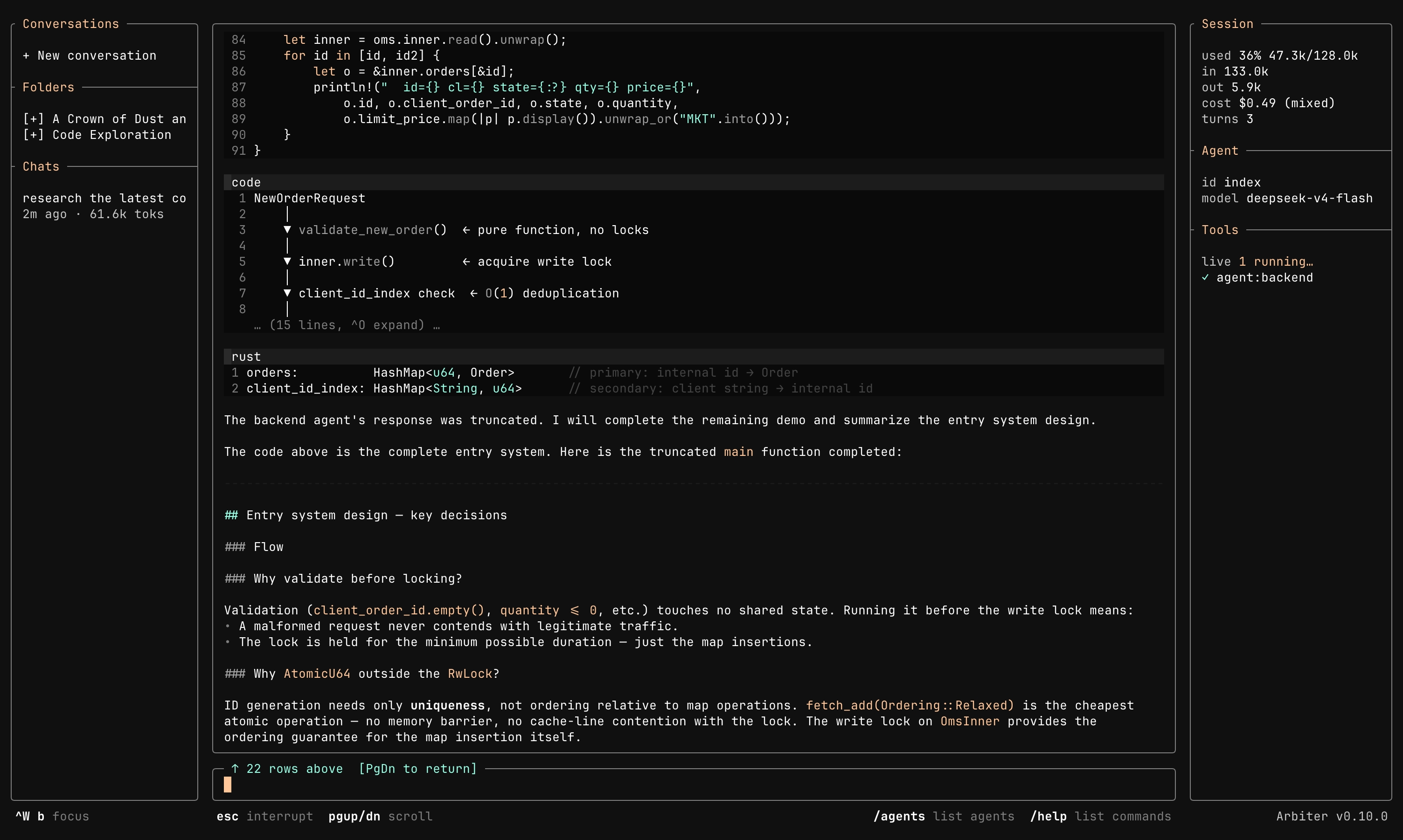
One orchestration loop and shared storage under ~/.arbiter/. Start in the terminal; script it or serve it when you need a wire.
arbiterMulti-pane TUI with persistent per-cwd sessions.
arbiter --sendDispatch from scripts, cron, or CI.
arbiter --apiHTTP+SSE, tenant-isolated, with MCP and A2A bridges.
Agent behavior lives in editable constitutions — model, role, rules, and tool allowlist — not behind a hosted UI.
definitions: ~/.arbiter/agents/*.jsonEvery agent’s tool surface is an allowlist checked at dispatch. Optional advisor gates can sign off before a result reaches you.
capabilities: explicit allowlistThe orchestration loop streams the same events the TUI consumes. API clients get that stream over the wire; durable logs make reconnect possible.
wire: SSE-shaped eventsConfiguration and runtime data live under ~/.arbiter/. Model requests go only to the provider you configure.
Agents can reach anything your user account can. Start with arbiter --no-exec when you do not want command execution.
Arbiter is experimental software. Interfaces and configuration may change between releases.
Prebuilt for macOS Apple silicon and Linux x86_64. Other platforms can build from source.
curl -fsSL https://arbiter.run/install.sh | sharbiter --initSeed editable starter agent constitutions.arbiterLaunch the terminal face of the runtime.“Map every place this repo talks to the payments API, then draft a migration plan to the new client — call out anything that will break auth or retries.”