01Same surface
The API the CLI speaks
The workspace runs on the exact HTTP API the open runtime exposes. What you use hosted, you can run yourself.
arbiter.run is the hosted home for supervised agent workflows — a dashboard for everything in flight, a visual agent builder, and a navigable memory graph, all on the open runtime and the same HTTP API.
The workspace runs on the exact HTTP API the open runtime exposes. What you use hosted, you can run yourself.
Top up credits and run — provider keys included and metered per request. No separate provider accounts to wire up.
Agents, conversations, memory, and artifacts are scoped to your workspace. Bearer-token auth, isolated per tenant.
Watch execution as it happens — sub-agent fan-outs, tool calls, advisor verdicts — over the same SSE stream a client would read.
Each view is a window onto the same orchestration API — and onto the same agents, memory, and runs.
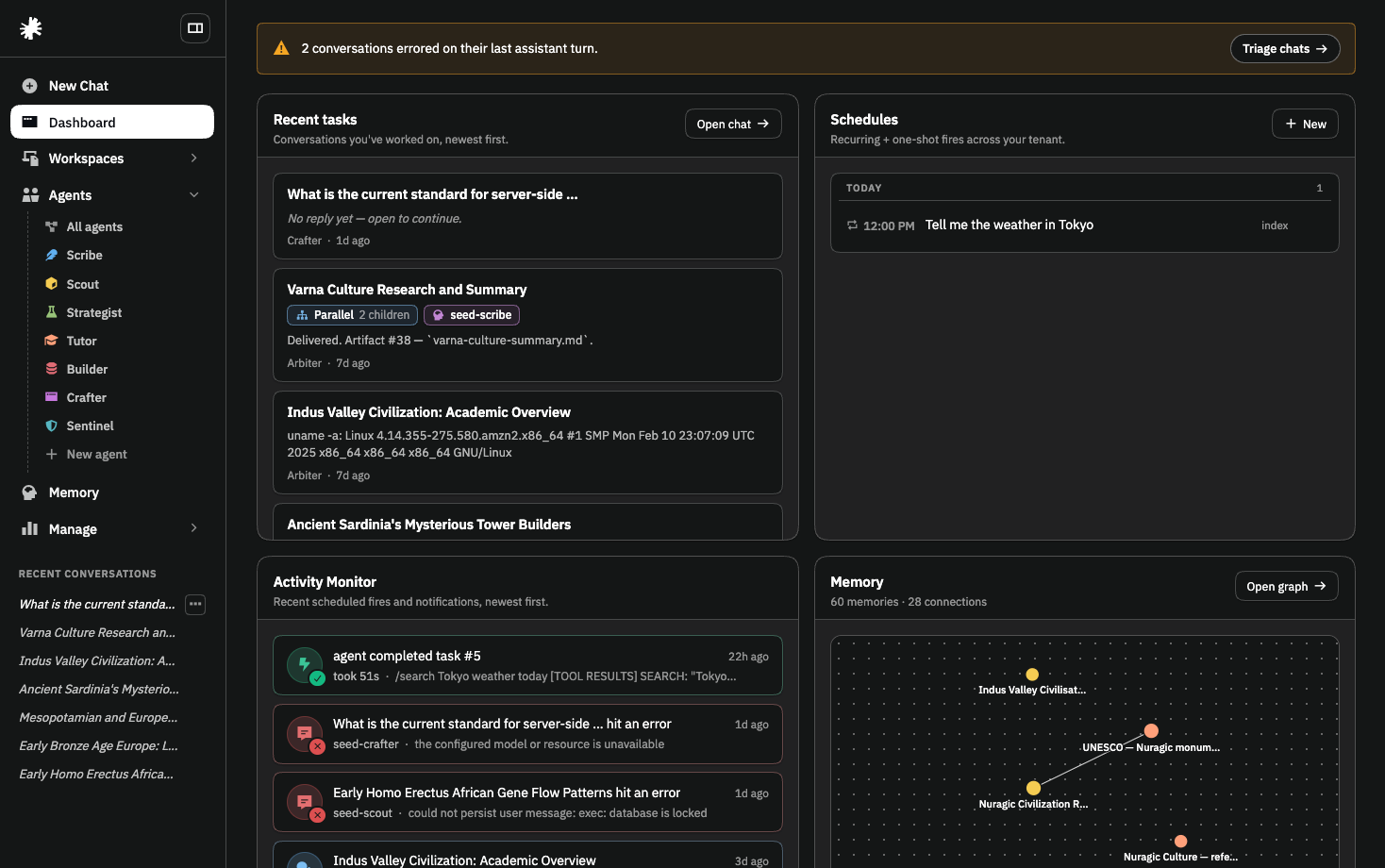
Land in the workspace and see what your agents are doing — recent tasks, scheduled runs, a live activity feed, and a window onto memory, all on one screen.
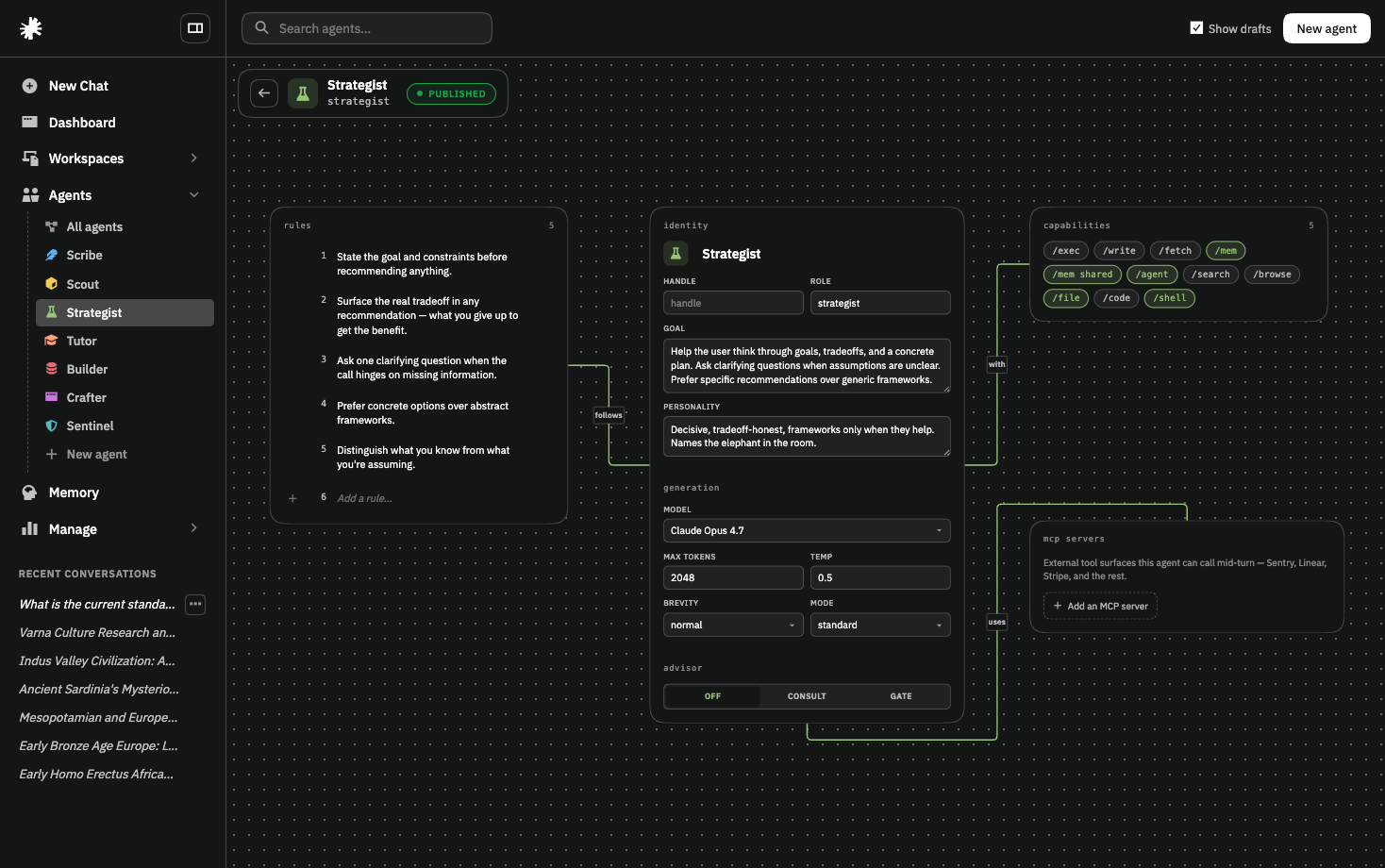
Wire up an agent visually — its identity and goal, the rules it follows, the capabilities it can call, the MCP servers it reaches — and see how the pieces connect before you publish.
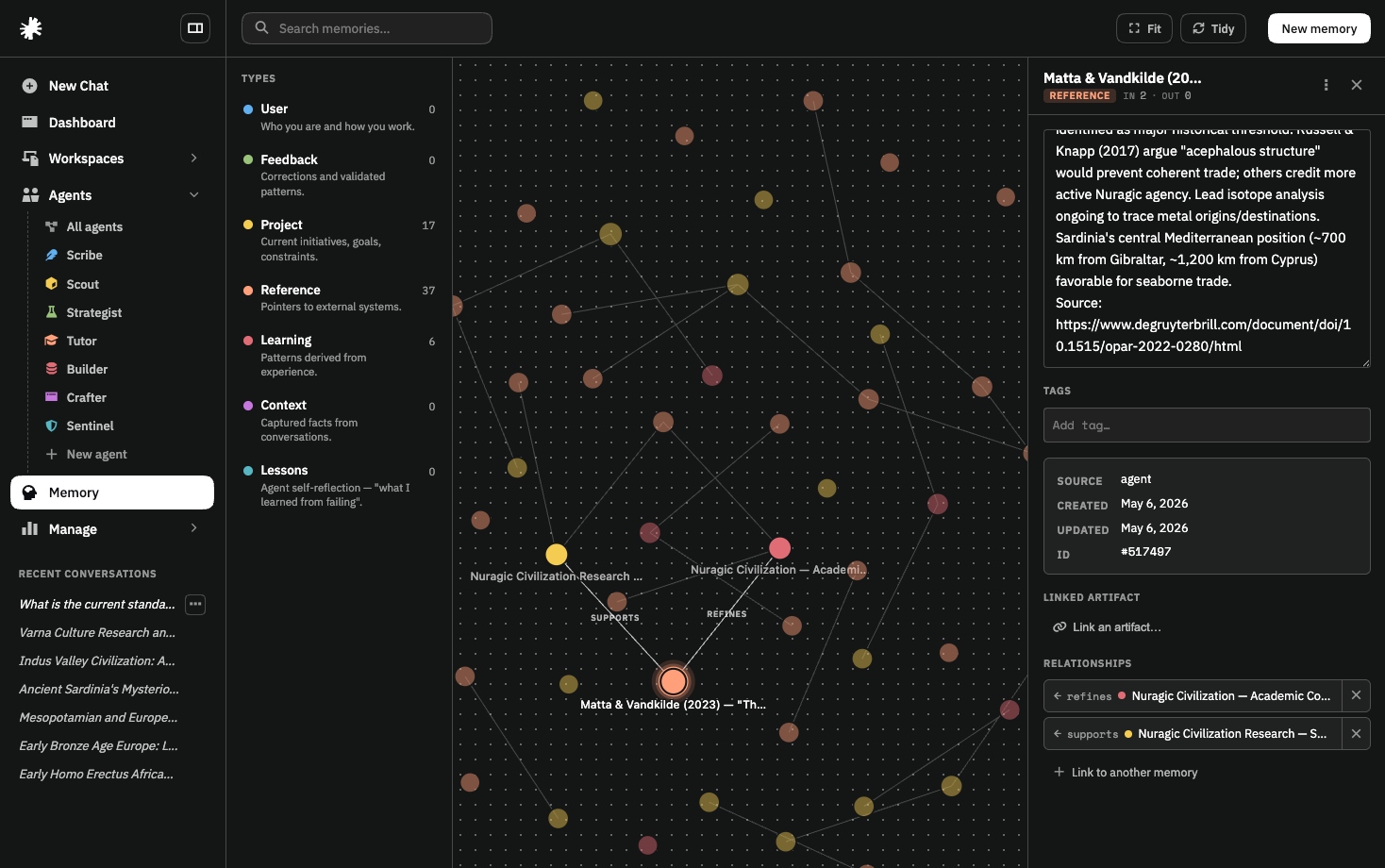
Memory is a typed graph of entries and relations, not a flat vector dump. Browse it, filter by type, and follow how one memory connects to the next.
arbiter.run is in invite-only beta. Credit-based pricing — top up, run, stop when you want. No telemetry on your prompts, ever.